

Real incidents, real standards, real work from the hazardous area field.
Issue No.
01
Jul 2026
Introducing the Exloc Bulletin
We're retiring the old monthly update format and starting something new.
Starting this month, Exloc is launching a new monthly publication — the Exloc Bulletin — built to give our customers sharper, more useful content every issue. Think real incident analysis, industry news that actually matters to hazardous area work, plain-language breakdowns of the standards you deal with daily, and highlights of the latest cutting edge hazardous area products.
Exloc Bulletin features new sections, a new look, and a sharper focus on what actually helps you do your job safely and efficiently in hazardous areas.
Issue 01 is live now. Here's what's inside.
Arc Flash Halts Capital Project at Baltimore Wastewater Plant
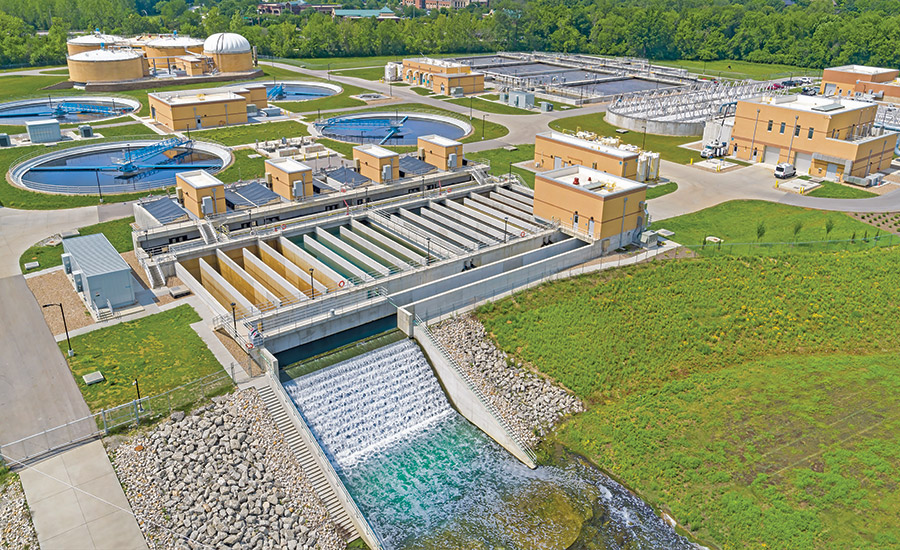
On June 9, an electrical fault or arc flash during construction work injured three contractors at Baltimore's Patapsco Wastewater Treatment Plant, according to the city's Department of Public Works. Two contractors remained hospitalized in critical and serious condition in the days following the incident.
The contractors were working on an electrical upgrade project intended to expand the plant's power capacity when the fault occurred. Fire officials described a sudden, high-energy event — Baltimore City Fire Chief James Wallace said investigators believe there may have been some power arc or a blown fuse, but either way, it happened with significant force. DPW was careful to note the explosion was unrelated to the plant's wastewater treatment processes or day-to-day operations — this wasn't a digester gas or process-hazard event. It was a fault during routine capital construction work.
That distinction is the real story for our readers. Capital improvement and electrical capacity projects put crews and equipment into active facility environments — often adjacent to, or inside, classified areas — well outside the controlled conditions of normal operations. An arc flash during construction work is a reminder that hazardous area classifications and intrinsically safe equipment requirements don't pause for a project timeline. If anything, temporary work, exposed panels, and non-routine electrical tie-ins raise the stakes.
Takeaway: Before any capital or upgrade project touches a classified area, confirm that all temporary and permanent electrical equipment — not just the finished installation — meets the site's Zone/Division and Ex rating requirements. Construction-phase risk is still hazardous-area risk.
Class/Division and Zone
—
Understanding Where They Overlap
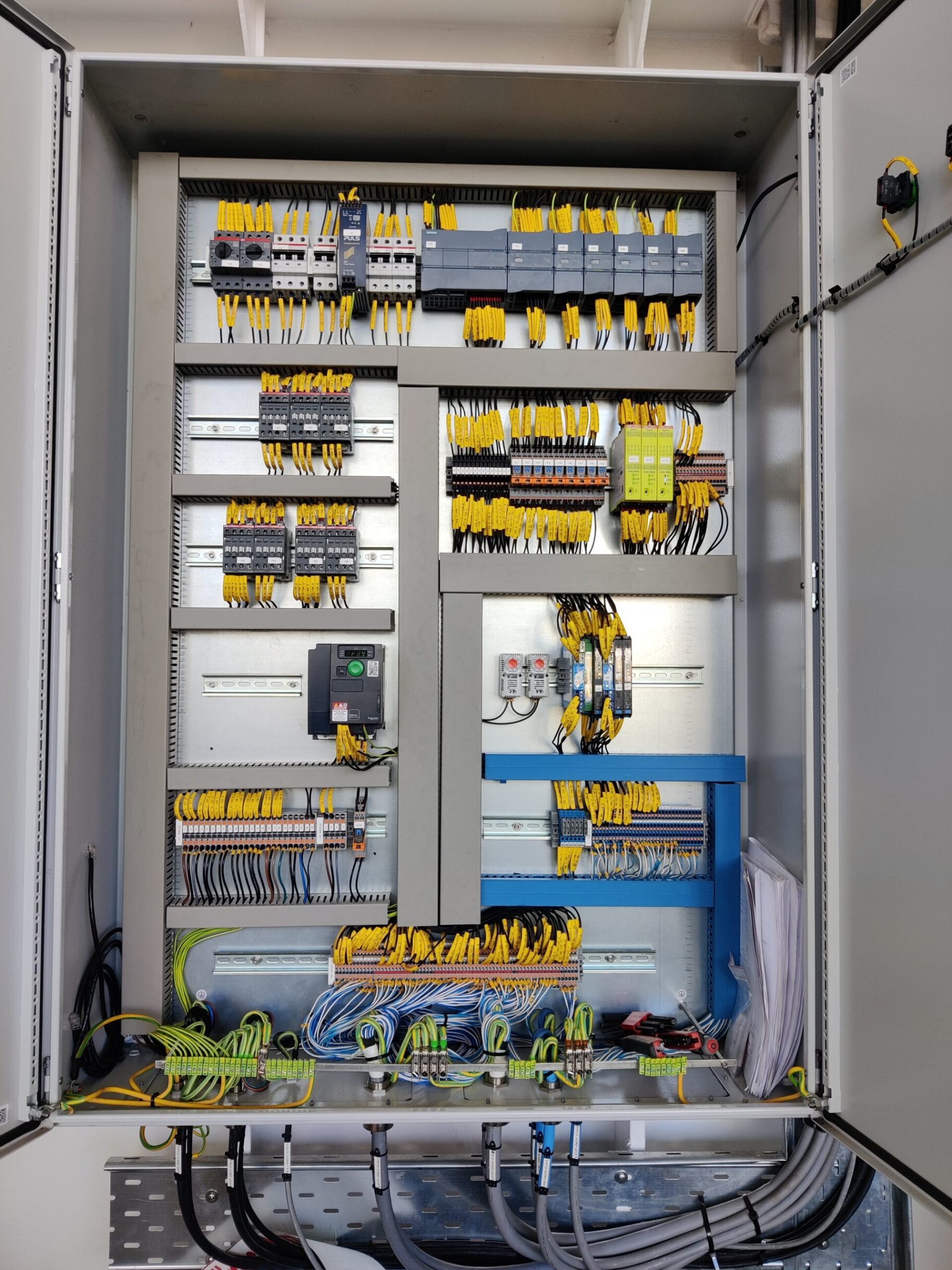
NFPA 70 (the National Electrical Code) houses both classification systems side by side. Article 500 governs the traditional Class/Division system, while Articles 505 and 506 cover the Zone system that aligns with international IEC standards. Both are fully legal to use, and under NEC Article 501.5, Zone-rated equipment can be permitted in Class I Division locations under specific conditions: equipment listed for Zone 0, 1, or 2 may be used in Class I Division 2 locations, and equipment listed for Zone 0 may be used in Class I Division 1 or Division 2 locations — provided the gas group and temperature class are suitable in both cases.
One of the practical benefits of the Zone system's inclusion in the NEC is that it brings previously unrecognized protection methods into use in the U.S. Protection concepts like Ex e (increased safety) and Ex nR (restricted breathing) — which had no equivalent under the traditional Class/Division framework — are now permitted in Zone 2 and Class I Division 2 locations. This gives operators greater flexibility when selecting the right protection method for their application, rather than being limited to the handful of concepts recognized under the Division system alone.
For facilities specifying or auditing equipment, the key is understanding which protection concept applies to each piece of equipment and confirming the gas group and temperature class are appropriate for the location — whether that location is classified under the Division or Zone system.
Ex ia vs. Ex ib vs. Ex ic
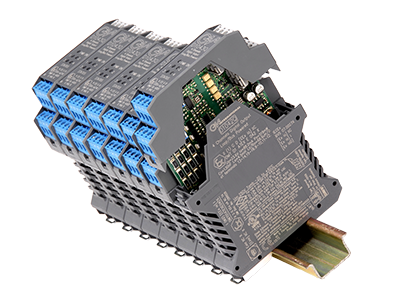
If you've spent any time reading spec sheets for intrinsically safe equipment, you've seen the letters — Ex ia, Ex ib, Ex ic — stamped right next to the certification marks. They all mean "intrinsically safe," but they are not interchangeable, and picking the wrong one for your zone can mean a device that's technically "IS" but still wrong for the application.
What they have in common. All three levels work the same basic way: they limit the electrical energy in a circuit — voltage, current, and stored energy — so it's too low to ignite a surrounding explosive atmosphere, even if something goes wrong. The letters tell you exactly how much "wrong" the design accounts for.
Ex ia — built for the worst case. Ex ia is the highest protection level. It's designed to stay safe even with two independent faults occurring at the same time. This is the rating you need for Zone 0 — areas where an explosive atmosphere is present continuously or for long periods, like the inside of a storage tank. If a device is rated for Zone 0, it's Ex ia.
Ex ib — one fault, not two. Ex ib accounts for a single fault in the circuit. It's the standard protection level for Zone 1, where an explosive atmosphere is likely to occur during normal operation. Most everyday intrinsically safe field instruments — transmitters, indicators, sensors — carry an Ex ib rating because Zone 1 is where the bulk of process industry equipment lives.
Ex ic — safe under normal conditions only. Ex ic assumes normal operation, no faults. It's intended for Zone 2, where an explosive atmosphere is only expected to occur rarely, and only for short periods. It's a lower-cost protection method appropriate for lower-risk areas — but it is not a substitute for ia or ib in a higher-risk zone.
Why it matters: An Ex ic-rated device might look identical to an Ex ia device on the shelf, but installing it in a Zone 0 or Zone 1 area isn't just a compliance paperwork problem — it's a real safety gap, because the device wasn't designed to remain safe under the fault conditions that zone assumes. Always match the "i" letter to the zone, not just the "Ex i" prefix.
Ed's Perspective
 Note: this section will rotate between leadership perspectives and real customer stories from the field. We're kicking off Issue 01 with a note from Ed.
I'm excited about what we're starting here.
The Exloc Bulletin is a new kind of publication for us — sharper, more useful, and built around the things our customers actually deal with day to day: real incidents, real standards, real work happening on the ground. It's a step up from anything we've put out before, and I think it's going to take us far.
This is just the beginning. Future issues will bring you stories straight from customers doing the real work in the field — but for Issue 01, I wanted to kick things off myself and share why we're doing this and where I think it's headed.
Thanks for reading. Here's to Issue 01.
Two Worth Knowing

IS540.X Smartphone
The IS540.X is i.safe MOBILE's flagship Android smartphone for classified locations — and it's built for more than just hazardous area compliance. The IS540.X carries full AT&T and Verizon carrier approval, meaning it's cleared for both explosion protection and real-world network reliability. That's a distinction that matters more than it might seem: a device can be perfectly rated for Class I Division 1 or Zone 1 and still create headaches on the network side if it isn't carrier-approved.
The IS540.X is available in three variants — Class I Division 1/Zone 1, Class I Division 2/Zone 2, and Rugged General Purpose — so one device family can cover a site from the Zone 1 wellhead to the general-purpose control room.

BA324G Loop Powered Indicator
For process monitoring that just needs to work, the BEKA BA324G delivers exactly that. This fourth-generation, intrinsically safe 4/20mA loop powered indicator features a large, high-contrast 5-digit display (29mm high) with a wide viewing angle. It's rated IP66, operates from -40°F to +158°F, and includes a built-in root extractor, linearizer, and tare function standard — features that used to be optional extras on older models.
The BA324G carries ATEX, IECEx, and ETL approvals (Class I Division 1, Zone 0, Groups A–D), and is backed by a three-year guarantee. It ships factory-calibrated at no additional charge.